🌱 What is Urban Farming?
Urban farming is the practice of growing food in cities rather than on traditional rural farms. As cities grow and farmland becomes more limited, people are finding new ways to produce food closer to where they live. Urban farming can take place on rooftops, in community gardens, inside buildings, or even in small backyard spaces.
Urban farming can happen in many different places, including:
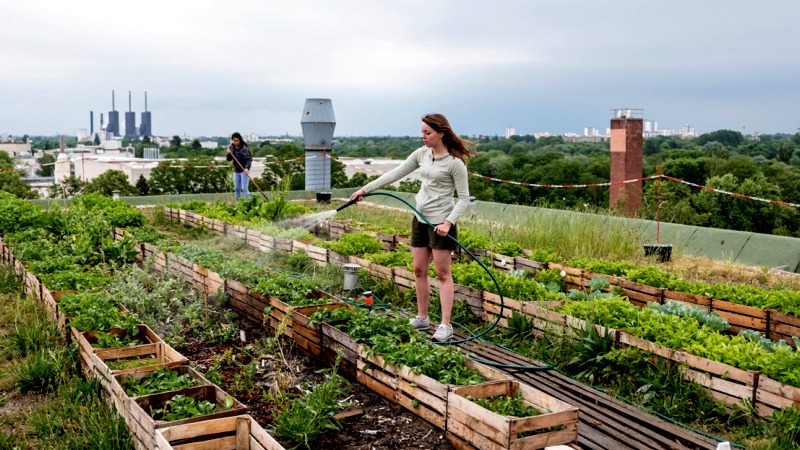
- Rooftops – unused building space turned into gardens
- Community gardens – shared spaces where people grow food together
- Indoor farms – buildings that use lights and controlled systems
- Small spaces – balconies, patios, or backyards
These options allow food to be grown even in crowded cities.
Benefits of Urban Farming
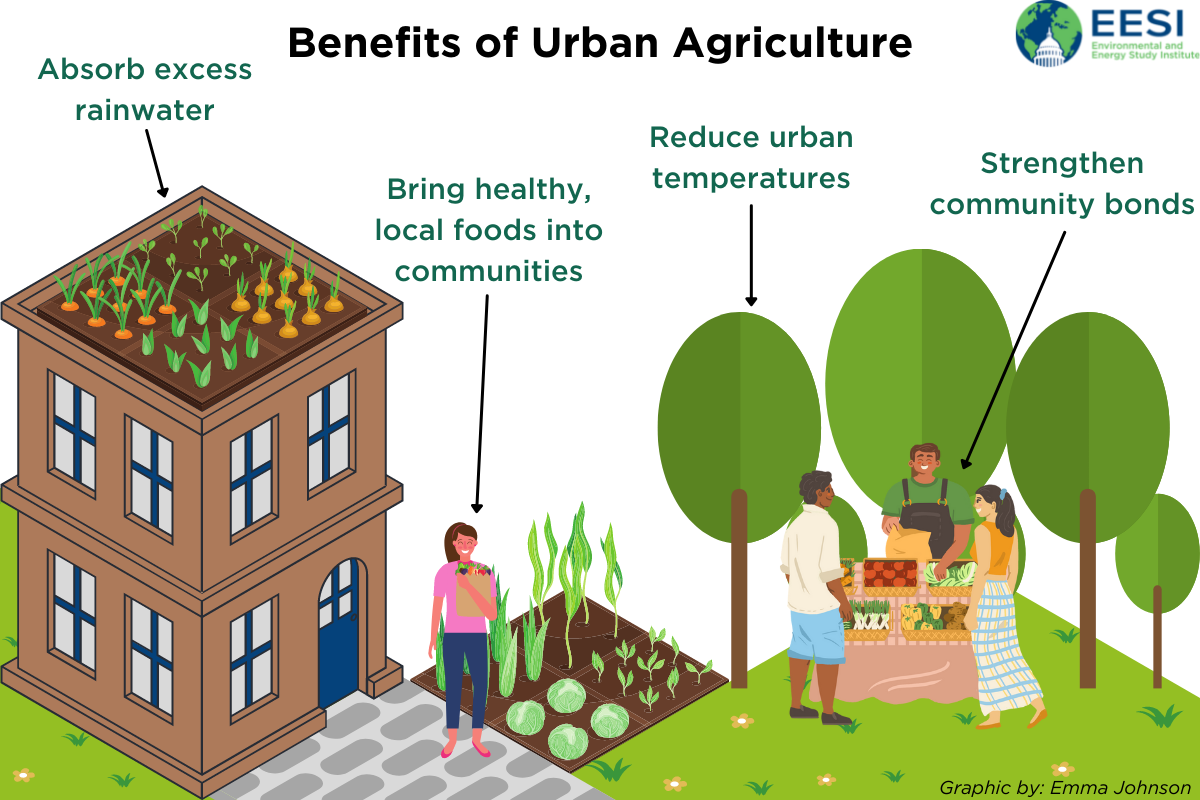
Urban farming offers several advantages:
- Reduces food transportation
Food doesn’t have to travel long distances - Provides fresh, local food
Crops can be harvested and eaten quickly - Uses space efficiently
Turns unused areas into productive land - Helps the environment
Can reduce pollution and city heat
Challenges of Urban Farming
Even though urban farming has benefits, it also has challenges:
- Limited space
Cities don’t have large areas for farming - Smaller food production
Cannot produce as much as large farms - Energy use
Indoor farms require electricity for lighting - Water and maintenance needs
Systems must be carefully managed
Is Urban Farming Sustainable?
Urban farming can be a more sustainable option in cities because it reduces transportation and makes use of available space. However, it is not a complete solution. It works best when combined with other farming methods to help feed large populations.